

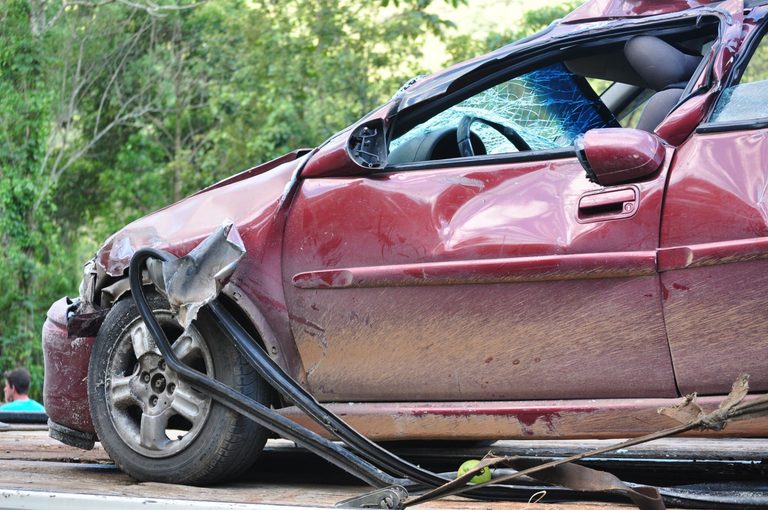
When you want to gain a clear understanding of your financial status, your assets are key to the calculations. But if your car has seen some wear and tear, it’s hard to know how much money it truly adds to your net worth. After all, front-end damage, high mileage, car payments, and other factors can impact its current value.
If your car has endured some damage, you’ve come to the right place. Read on to learn how to count a damaged car in your net worth.
Defining Your Net Worth
Think of your net worth as a glimpse of your financial standing. To determine your net worth, add up the value of all of your assets, like a house, car, retirement accounts, and precious jewelry first. These are the items that help build your wealth.
But your assets alone don’t account for your net worth. You must deduct all of your debts, too.
Your debts are your liabilities, and they reduce your total net worth. Student loan payments, mortgage payments, and credit card debt count against your net worth. If you have $70,000 in debts but have $180,000 worth of assets, for instance, your net worth would be $110,000.
When you’re considering how a car impacts your net worth, you’ll need to evaluate its current value. In other words, if it has sustained damage due to an accident or general wear and tear, it won’t be worth as much as it was when you purchased it.
Calculating a Realistic Car Value
Since your car’s value will affect your net worth, you want to arrive at an accurate calculation of it. Even if you paid $25,000 for a new car five years ago, don’t expect that it will be worth that much now. Car values can go down by roughly 12% each year.
Dents, damage, dirtiness, and high mileage can all cause a car to depreciate more quickly. To figure out your car’s value, research other similar cars as a point of comparison. Look for the same make and model year, and find cars with the same mileage or condition notes.
Not all types of damage are the same, either. Flood or structural damage can really hurt a car’s value, but small paint scratches and dents in the bumper won’t be as bad. Ultimately, you want to determine a value for your car that is aligned with a realistic selling price for it.
Considering the Impact of an Accident
Even the most responsible drivers can find themselves in accidents. And if your car has sustained damage from a collision, you’ll need to factor that into its value. After all, someone may be reluctant to buy a vehicle knowing it’s been involved in an accident.
While a good mechanic can restore a car’s usability, concerns about its longevity can linger. Bent frames, misaligned wheels, and small fractures can emerge down the road. And some people may not want to deal with a car that has unknown reliability after an accident.
Sometimes, it can be helpful to seek input from an independent auto damage appraiser. Likewise, an experienced dealer can help you understand how an accident and the resulting damage affect your car’s value.
If repairs could cost more than the car is worth, estimating its salvage car value could help you compare selling it as-is with keeping it. Even if the car is no longer drivable, its parts or scrap metal may have a market of interested buyers.
Weighing Your Options
After you’ve arrived at a reasonable number for your car’s value, you’ll need to decide what makes the most sense. A freshly damaged car may have repairs that exceed its value, for instance. And that could make selling for scrap the best choice.
Or, you may simply decide that your car isn’t a good fit anymore. If you’re routinely hauling large items, for instance, you may need to invest in a truck and sell your SUV. Plan to investigate how selling your car could affect loan repayments, if applicable.
In other instances, it may simply make sense to repair and hang onto your car. Always get a few quotes from different mechanics, especially if damage is extensive.
Yes, repairs can be costly. But if you can get your car back into shape as a safe and reliable vehicle, you can save money over making monthly payments on a new car. Just be sure that you’re turning to a certified mechanic with a strong reputation for all repair work.
Reviewing Your Net Worth Estimate
Your net worth will always be changing as you acquire property, pay off debts, or incur new debts. And as your car ages or endures damage from accidents, its impact on your net worth will shift, as well. Consequently, it’s smart to regularly update your car’s estimated value so you can gain a solid view of your financial situation.
Always research comparable car values, and don’t be afraid to consult an appraiser or dealer for input. Know your future driving needs, too, so you can determine whether a damaged car is worth keeping or selling. With clear knowledge of your car’s current value, you can see how it fits into your long-term financial decisions.